

An Unsolved Midwest Mystery Between Fleeting Clues and Secrets Never Revealed
Wisconsin, March 8, 1921 – It was one of those gray, foggy mornings that seem to herald unsettling news. John Brlich, a worker at the O’Laughlin Stone Company in Waukesha, noticed something unusual floating in the pond near the quarry. As he approached, he realized immediately that it was neither an animal nor debris, but the body of a child. The little boy, dressed in elegant, finely made clothing, appeared to come from a wealthy family. Yet, no one ever came forward to claim him. The press nicknamed him “Little Lord Fauntleroy”, evoking the famous character from a children’s novel. But who was this child, really? And what cruel fate had led him there?

The Discovery
The child’s body, about five or six years old, floated motionless in the icy waters of the pond. Blonde hair framed a delicate face, brown eyes, and a small gap in the lower jaw where a tooth was missing. He wore a gray sweater, Munsing underwear, black socks, a shirt, and patent leather shoes—clothing of evident quality, suggesting a well-off family background. Authorities estimated that he had been dead for weeks, perhaps months.
The autopsy revealed the cause of death: a blunt force trauma to the skull. The lungs contained very little water, indicating that the child was already dead when he was thrown into the pond, transforming what should have been a place of life into a macabre crime scene.

What Happens to a Body in Water
When Little Lord Fauntleroy’s body was found floating, experts were confronted with the effects of weeks spent in water and the advanced post-mortem processes. For a forensic examiner—and for those observing with a nursing perspective—every detail tells a silent story of time and the circumstances of death.
The water accelerated body heat loss (algor mortis) far more rapidly than air, causing early rigor mortis and influencing the estimated time of death. The skin showed pallor (attenuated livor mortis), blotches, and initial blistering, signs of maceration. Submerged, hydrated skin began to peel, revealing underlying tissue damage—a quiet record of the body’s time in the water.
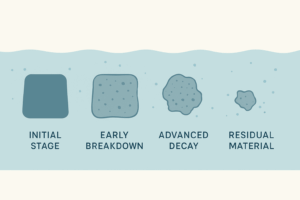
Soft tissues, muscles and internal organs decompose faster underwater than in open air, complicating the distinction between pre-mortem injuries and post-mortem damage from decomposition. Still, trained eyes can detect bruising, fractures and contusions even after weeks of immersion.
After a few days, gas formation from decomposition caused the body to float. This explains why Little Lord Fauntleroy was found on the surface weeks after death, far from the original site. During this drift, small items—buttons, hair, shoes—could detach or deteriorate, complicating identification.
Investigators carefully examined livor mortis, skin maceration, and sediment or algae adherence on clothing and skin—silent but crucial clues for estimating immersion time and sometimes reconstructing the circumstances of abandonment. Every detail, even seemingly minor, represented a vital piece in restoring a story, an origin, a voice that death had tried to erase.
The Woman in Red
Five weeks before the mystery unfolded, a quarry worker still recalled that day with unease. A woman in a red sweater, her eyes streaked with tears, desperately asked if anyone had seen a child nearby. At her side, a man silently watched, scanning every corner of the quarry as if mentally marking the spots where fate would play its cruel hand.
Without a word, they left together, climbing into a dark Ford and disappearing like ghosts into the afternoon mist. No one ever identified them.
Years later, local whispers told a grim tale: the woman in red, consumed by guilt or sorrow, had allegedly taken her own life in the same pond where the child had been found. But, as is often the case with unsettling mysteries, there is no concrete evidence, only a shadow blending with the silent water and the memory of those who saw.

The Investigation
Authorities acted quickly. The child’s carefully dressed face appeared in all the Midwest newspapers, alongside a promise: $1,000 reward for anyone who could provide a name for the unidentified boy. But the silence was deafening. No one came forward.
Tips, when they arrived, proved to be illusions. A Waukesha merchant swore he had sold the same clothes in a January sale, but the buyer had vanished without a trace. Then a man from Chicago claimed the child was his nephew. For a moment, it seemed the mystery might be solved. But investigators quickly discovered the sister’s children were alive and well, far from any tragedy.
Every lead crumbled, leaving the image of Little Lord Fauntleroy staring out from the black-and-white newspapers—a forgotten face, still asking to be recognized.
The Burial
On March 17, 1921, under a gray, motionless sky, the unknown child finally found rest at Prairie Home Cemetery in Waukesha.
He had no name, no family waiting for him.
Only silence and a coffin paid for with the heart of a woman who had never known him. Her name was Minnie Conrad. She raised the funds for a proper burial and, every year until her death in 1940, returned to lay fresh flowers on his grave. No one knew why that child had touched her so deeply. Some swore she knew his true identity but chose to carry the secret to her grave.
As time erased the faces and voices of those who knew the case, only Minnie and that small grave remained to tell a story the world had forgotten—a story of compassion, mystery, and silence.

⚠️ Warning: In this part of the article there is an image depicts trauma and may be disturbing.
Signs of Injury: A Nursing Perspective
Observing Little Lord Fauntleroy’s body meant reading a story written in flesh and tissue—a tale of violence and abandonment. From a forensic and nursing perspective, every mark was a clue to reconstructing the last moments of his short life.
The child had been struck with a blunt object, leaving bruises and skull fractures distinguishable even after weeks, despite maceration and advanced decomposition. Repeated trauma often leaves specific patterns: bruises in various healing stages, injuries consistent with contact with hard surfaces, helping investigators hypothesize not only the sequence of events but the dynamics of the assault.
The fact that the blow was lethal and the body later abandoned in the pond suggests swift action and deliberate planning.

Yet, his clothing told a different story. Clean sweater, intact socks, and polished shoes indicated care—he had come from a family that looked after him. In cases of abuse or abduction, examining hygiene, clothing, and nutritional status provides important clues about the victim’s socioeconomic background and quality of life before the traumatic event.
The absence of malnutrition or serious illness suggested the child had been generally healthy before the assault. From a nursing perspective, this makes the tragedy even more poignant: the trauma came not from neglect but from external, sudden, and unpredictable violence. Each bruise became a silent message of pain and vulnerability, a detail medical science can interpret to give voice to the victim.

Violence did not affect only Little Lord Fauntleroy’s body. The community that discovered him also experienced deep emotional impact. Rescuers, neighbors, and those who cared for him after death—like Minnie Conrad—witnessed collective trauma. From a nursing and psychological perspective, events like this leave marks on the memory and spirit of a community, highlighting the importance of psychological support and showing how even symbolic acts of care can help soothe grief.
Thus, the child’s body and the signs of violence become silent witnesses, tools to understand, analyze, and remember. Telling his story restores meaning to the pain, giving identity and dignity to a child the world lost too soon.
Theories and Hypotheses
In 1949, a Milwaukee forensic examiner reignited hope of naming the unknown child. Amid dusty files and newspaper clippings, he noticed a striking resemblance to another child who had disappeared around the same time: Homer Lemay.
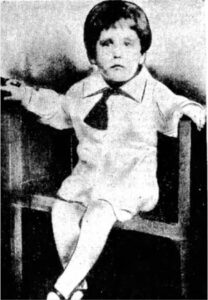
Homer’s father claimed his son had died in a car accident in South America. But investigators found no proof—no documents, certificates, or trace of the alleged “Norton” family who supposedly adopted the boy. It was as if the story had been fabricated to conceal something darker.
Over time, this lead faded, leaving only unanswered questions. Others hypothesized that the boy was not Homer, but a child from a wealthy environment, perhaps kidnapped and then abandoned in Waukesha to prevent identification. The refined clothing, careful details, and quality of the sweater all suggested a world far removed from poverty or neglect.
Thus, between half-truths and well-crafted lies, Little Lord Fauntleroy remained suspended in mystery, an enigma no one has yet unraveled.
Beyond the Mystery
The case of Little Lord Fauntleroy reads like a gothic novel but belongs to the darkest reality of America: a child found nameless, dressed in fine clothes, with a care that contrasts sharply with the tragedy that struck him. Since that day, his innocent face has continued to haunt generations of investigators, journalists and curious minds.
Despite searches, appeals, and hypotheses, his identity remains shrouded in silence, as if time itself had decided to guard his secret. Yet every small detail—the sweater’s color, the craftsmanship of his clothes, the sweetness of his features—offers a fragment of hidden truth.
The story of Little Lord Fauntleroy reminds us how fragile the line is between innocence and oblivion, and that, even in the face of the most impenetrable mysteries, the search for truth should never cease.
Samanta Sforna – All rights reserved.