

The nursery rhyme said ‘just a spoonful of sugar helps the medicine go down,’ but the reality of illness was harsher than any fairy tale.

London – March 25, 1956. It was a bright morning when Matthew Adam Garber was born. The son of Louis and Margot Garber, both theater actors, Matthew grew up surrounded by scripts, curtains and the voices of the stage. From an early age, he showed a natural talent for acting, combined with brilliant curiosity and exceptional intelligence.
At just seven years old, his life changed forever: he was chosen to play Michael Banks, the young protagonist of Mary Poppins (1964). With his sweet face and wide-eyed wonder, he became an icon of carefree childhood. By his side, Karen Dotrice, who played “sister” Jane, became a true friend, a playmate and laughter companion between scenes.
In the film, Michael Banks learns a little magic that everyone still remembers today:
“Just a spoonful of sugar helps the medicine go down.”
That simple, sweet rhyme promised that any medicine could be easier to take if accompanied by a little joy. But in real life, the “pill” that could have saved Matthew didn’t have enough sugar: the illness was stronger than imagination.
Life After Mary Poppins
The success of Mary Poppins made him famous worldwide, but for Matthew, it was just a chapter in a brief, bright journey. Before the Disney masterpiece, he had already appeared in The Three Lives of Thomasina (1963), and later starred in The Gnome-Mobile (1967), again alongside Karen Dotrice. After this last experience, his parents decided to return him to a more “normal” life, away from the spotlight, to focus on his studies.
Matthew attended Highgate School in London, where he developed a passion for literature, folk music, and travel. He was curious, thoughtful, with a contagious laugh and a kind soul. Many years later, Karen Dotrice remembered him this way:
“Matthew was full of life, always laughing. He had a brilliant sense of humor and a gentle soul. His loss was devastating”.
But, as often happens, the magic of cinema could not protect the young actor from the shadows of real life.
Early Signs: Fever and Fatigue
In 1976, at the age of twenty, Matthew decided to travel to India. He was seeking an experience that would broaden his mind, an authentic connection with the world. (This part of the story, passed down by friends and colleague Karen Dotrice, has never been officially confirmed, but is considered plausible by modern biographies). During the trip, the first symptoms appeared: persistent fever, extreme fatigue and increasing abdominal pain.
These were early warnings of Hepatitis, an inflammation of the liver caused by viruses transmitted through contaminated water and food (hepatitis A and E) or via blood and bodily fluids (hepatitis B and C). At first, it may seem like a strong flu, but behind the fever and nausea, the liver inflames and stops filtering toxins properly, causing jaundice—yellowing of the skin and eyes due to bilirubin buildup—pain, and weakness. In the 1970s, diagnosis was difficult and treatments limited. Vaccines and effective antivirals did not exist. What seemed like a temporary illness began to turn into something much more serious.

Diagnosing Hepatitis
Today, diagnosing hepatitis is fast and accurate. With simple blood tests, doctors can detect liver inflammation and identify the specific virus responsible. Ultrasound imaging helps assess the condition of the liver, while in more complex cases, CT or MRI scans provide a clearer picture. Occasionally, a liver biopsy may be performed to evaluate the extent of the damage.
Thanks to these tools, physicians can now diagnose and treat hepatitis early—preventing the severe complications that once claimed so many lives.
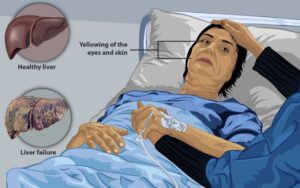
From Hepatitis to Pancreatitis
According to official sources, Matthew Garber’s cause of death was acute necrotizing pancreatitis due to complications from viral hepatitis. The exact virus was never identified, but scholars speculate it was a viral form contracted during his trip to India.
The connection between hepatitis and pancreatitis is complex but real. Hepatitis weakens the body and alters metabolic processes, which can “stress” the pancreas. Certain hepatitis viruses can also directly infect pancreatic cells, causing acute inflammation.
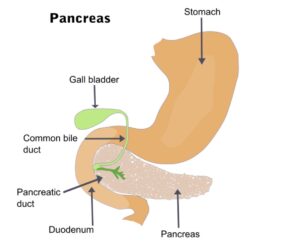
Over time, the infection caused a general imbalance in the body. The immune system, under stress, began attacking other organs, including the pancreas, leading to acute pancreatitis—one of the most painful and dangerous conditions.
Pancreatitis is inflammation of the gland that produces digestive enzymes and hormones such as insulin. When inflamed, the enzymes that are supposed to aid digestion start “digesting” the pancreas itself, causing severe pain, fever, and vomiting.
In Garber’s case, the disease progressed to its most severe form: Hemorrhagic Necrotizing Pancreatitis. In this condition, pancreatic tissue dies (necrosis) and internal bleeding occurs, quickly leading to widespread infection and organ failure. It is one of the most dramatic medical emergencies: the pain is excruciating and the body responds with high fever, shock and metabolic collapse.
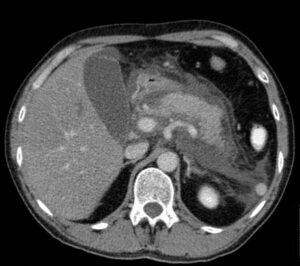
The Desperate Battle
Back in London, Matthew was admitted to the Royal Free Hospital in Hampstead. Doctors tried to stabilize him with the supportive therapies available at the time—fluids, painkillers, controlled nutrition—but his body was already in systemic crisis.
The pancreatitis had triggered Multi-Organ Failure, a condition in which two or more vital organs stop functioning properly due to a widespread inflammatory response. Blood no longer delivers enough oxygen, tissues are deprived of nutrients, and the body gradually shuts down.
In June 1977, at just twenty-one, Matthew Garber passed away after a long and silent battle.

The Human Side of Care

During Matthew’s final days at the Royal Free Hospital, the medical battle was accompanied by another, quieter one — the compassionate vigilance of nurses. In the 1970s, before modern intensive care protocols, much of the comfort and dignity of patients depended on nursing presence. Between IV drips and blood tests, nurses were the ones who noticed small changes — a shift in breathing, a moment of restlessness, a flicker of pain in the eyes.
They provided what medicine alone could not: human closeness. Even as technology and pharmacology were limited, the nurses’ role in relieving suffering — through gentle touch, cooling a fevered forehead, or simply staying by the bedside — represented the essence of holistic care. Today, this same spirit lives on in modern nursing, which integrates scientific expertise with empathy, turning every hospital room into a space not only of treatment but of humanity.
Understanding to Prevent
Today, thanks to advances in medicine, a story like Matthew’s could have a very different outcome:
• Vaccines against hepatitis A and B protect against many viral forms
• Early diagnosis, through blood tests, ultrasounds, and CT scans, allows prompt intervention
• Modern intensive care units can support failing organs, greatly increasing chances of survival
• Today, necrotizing pancreatitis has a 70–80% survival rate if treated promptly with drainage, antibiotics, and intensive support
In a world with greater health awareness, a young traveler’s adventure should never turn into a tragedy.
Matthew Garber’s Legacy
Matthew Garber left us a precious legacy: not only his cinematic smile but also a testimony of how fragile and extraordinary life can be. His Michael Banks continues to represent childhood curiosity and wonder, but his personal story reminds us that medical knowledge, prevention, and treatment are tools of hope just as much as imagination and art.
In 2004, Disney posthumously awarded him the title of Disney Legend, recognizing him as one of the most beloved faces of his era. A generation later, his name still evokes tenderness and melancholy, like the sweet, fleeting note of a distant song.

Today We Know That…
• Viral Hepatitis is now curable or preventable in 95% of cases, thanks to vaccines and antiviral drugs
• Necrotizing Pancreatitis has a very high survival rate if diagnosed and treated early
• Multi-Organ Failure, once almost always fatal, can now be managed with assisted ventilation, dialysis, and continuous monitoring.
Medicine cannot change the past, but it can give meaning to its lessons. In remembering Matthew Garber, we celebrate not only a young actor but also the value of knowledge that transforms tragedy into awareness.

A Life Lesson
Matthew Garber’s story is that of a bright talent lost too soon, but also a symbol of a time when medicine did not yet have the tools to save those who today would have had much greater chances. His experiences remind us how fragile and precious health is, and how prevention—even a vaccine or proper hygiene while traveling—can make the difference between life and death
Today, thanks to scientific progress, diseases like hepatitis or pancreatitis are no longer condemnations but challenges that medicine can face. In this, Matthew’s memory continues to teach us something essential:
Knowledge is the highest form of care.

Samanta Sforna – All rights reserved.